


Five silent letters that you need to know about in English
- Justin McCarthy

- Jul 27, 2020
- 5 min read

Just why is English pronunciation such a MESS?
Really though!
If I weren’t a native speaker, I would be very confused. To be honest.
So, my job today is to help you avoid the most typical mistakes in what can only be described
as a linguistic MINEFIELD.
If you have ever wondered why these confusing, mind-boggling or soul-destroying silent letters exist, I’ll now explain some of the reasons. Starting with Irish monks. Yes. Them.
THE IRISH CONNECTION

Irish monks who evangelised the neighbouring Anglo-Saxons were among the first to try to adapt the English language to the existing Latin alphabet. English had more sounds than the Latin letters could cope with and adaptations of these to the existing letters was often impossible. Nevertheless, English survived perfectly well. Latin, on the other hand… well, let’s move on to Flemish Printers.

FLEMISH PRINTERS
What about them? Well, they had the printing presses which were used to publish the first books in English. They printed what they thought was right. Maybe they thought that something was correct when it wasn’t or worse still, they often left in mistakes which they just couldn’t be bothered to fix.
Whatever the case, they controlled the written word, and this has lead to lots and lots of confusion, right up to the present day.
LOANWARDS

English has borrowed a lot of words from other languages. Tsunamis were not common in England, so English speakers had to make do with a word from Japanese, (however inappropriately it was spelled). Greek words beginning with p clusters (pn, psy, pt), were very popular, but were subsequently discovered to be practically impossible to pronounce (pneumonia, psychology). And let’s not forget French words, like Grand Prix. To a native English speaker there is a hugely significant difference between /grand_pree/ and /grand_pricks/
Linguistic Interference
Sometimes the confusion was caused by English linguists themselves. For centuries, plain and simple spellings existed, only for them to have extra letters added by linguistic experts so that people would be able to connect them to their Latin or Greek origins. The word debt - was originally spelled without a b. This was added intentionally because the experts believed people needed to be aware that the origin of the word debt was the Latin term debitum.
Now that we know why we have silent letters, let’s look at 5 very deadly silent letters.
I’ve decided to present them in alphabetical order, so the honour of opening this blog entry falls to the silent letter G.
G
Have you never thought that the pronunciation of words such as foreigner /fór_en_er/ or designer /des_ái_ner/ is completely wrong? You have, right? Now try pronouncing them with the letter g and see how easy it is.
It’s awful.
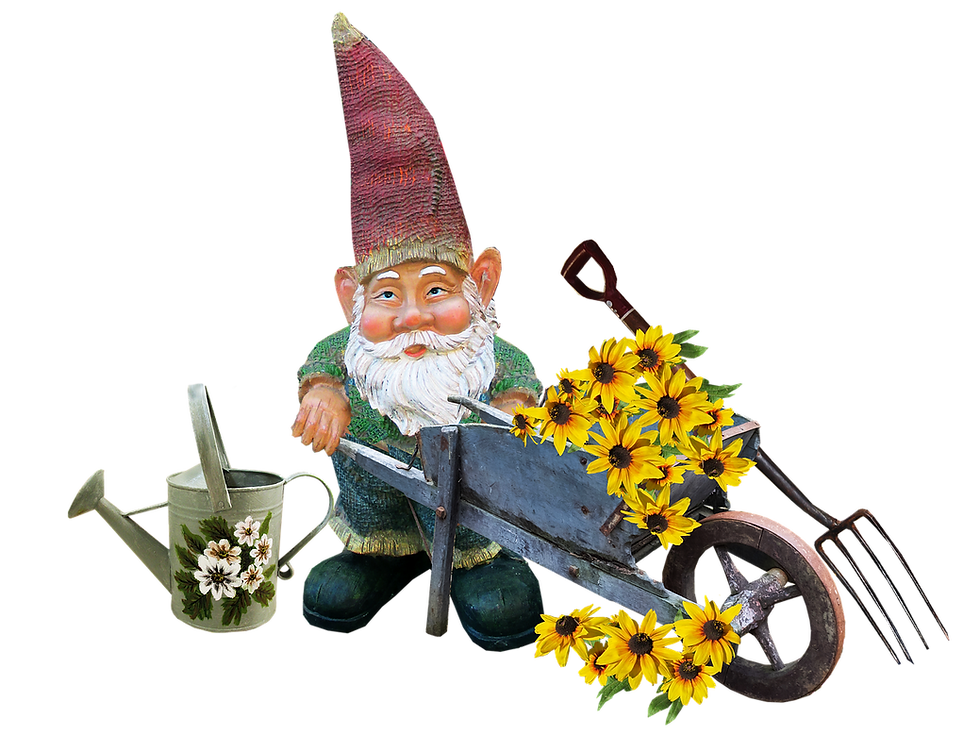
It´s difficult to say and sounds rather difficult. The g may not be pronounced, but it is there to change the way the surrounding vowels are pronounced. These are lengthened slightly such as in the words sign /sain/, malign /mal_áin/. Words such as gnarl, gnome and gnash are pronounced /narl/, /nome/ and /nash/ respectively. As you’ll have noticed, the silent g almost always precedes the letter n. They just don’t get along very well, do they?!
K
We have Dutch and German to blame for this.
Always blame the foreigners!


English took a lot of loanwords from Early and Middle Dutch and German, at a time when all letters were pronounced. Gradually, people felt the k was just a bit two awkward to say and it started to disappear. Nowadays, when the letter k is placed before the letter n at the beginning of a word, it is not pronounced.
For that reason, we have two /nees/ knees and not two /kuh-nees/. We read about the /naits/ Knights of the Round Table and not /kuh-naits/. Knickers are pronounced /nih-kers/ and are usually worn as underwear by women. However, as you will have discovered in life, not exclusively.
L
This should have a blog entry all of its own.
Today, just to make it simple, I’m going to say that when the letter l precedes another consonant, it’s
And although it seems as though we have dropped it from the pronunciation of so many words, this is not quite the case.
Could /kuhd/
Should /kuhd/
Would /wuhd/
Folk /foke/


The silent l often serves to lengthen the vowel that comes right before it.
Palm /pahm/
Calm /cahm/
Talk /tawk/
Walk /wok/
Salmon /sá_min/
N

If you go to church, you might hear the choir singing a hymn /him/.
If you look forward to the leaves falling off the trees and Halloween, then you like autumn /ót_im/. If you want to use a relatively polite swearword, you might say Damn! /dam/.
Some other examples are solemn, column and condemn.
The origin of each of these words is Latin (hymnus, autumnus, damnus), and in Latin as you can see, the mn was followed by a vowel and thus was quite easy to say. However, in English, vowels after the mn disappeared, making it almost impossible to pronounce the n. So impossible, that pronunciation of the n fell into disuse.
We can´t say that n is never used after the letter m. In the following words, the mn combination is found mid-word and is followed by a vowel: hymnal and autumnal.

T
The letter t is a strong and proud letter.
For centuries it was very clearly pronounced in words like castle /ká_sell/, wrestle /réh_sell/, apostle /a_póh_sell/ and whistle /wíh_sell/.
But even back then, it was quite complicated for our ancestors to get their tongues from the letter s to the letter t without covering listeners in saliva. Different dialects of English pronounced the t in different ways, but after the Great Vowel Shift around the 15th Century, (which completely changed how English vowels were pronounced), when there was a t before the letter s, it disappeared the the s was softened. Some other examples are Christmas /krís_mas/, fasten /fáss_en/ and listen /liss_en/. Silent t is also commonly found after the letter f, as in often /óff_en/ and before the ch sound, as in butcher /búch_er/ or match /mach/
And there are lots more where they came from!
But we’ll leave it at that for today.
If not, you might decide to stop speaking English altogether, and that would be quite counter-productive for everybody.
Please subscribe to my mailing list for information on future courses and freebies!
Here is the some of the difficult vocabulary that you might want to review:
Apostle an important early Christian teacher or pioneering missionary.
Butcher a person who cuts up and sells meat
Condemn express disapproval / sentence somebody to a punishment or death
Damn exclamation of anger or frustration
Fasten to close something
Gnarl a rough, knotty protuberance, especially on a tree
Gnash grind (one's teeth) together as a sign of anger
Gnome a small garden ornament in the form of a bearded man
Hymn / hymnal a religious song or poem of praise to God a book of ham
Knees the joint between the thigh and the lower leg in humans
Knickers women’s underwear that covers the lower part of the body
Knight a man who served his sovereign or lord as a mounted soldier in armour
Mind-boggling astonishing, amazing
Minefield a subject or situation presenting unseen risks or dangers
Soul-destroying incredibly monotonous or boring
Whistle an instrument used to produce a shrill, high-pitched sound
Wrestle take part in a fight, either as sport or in earnest


Comments